

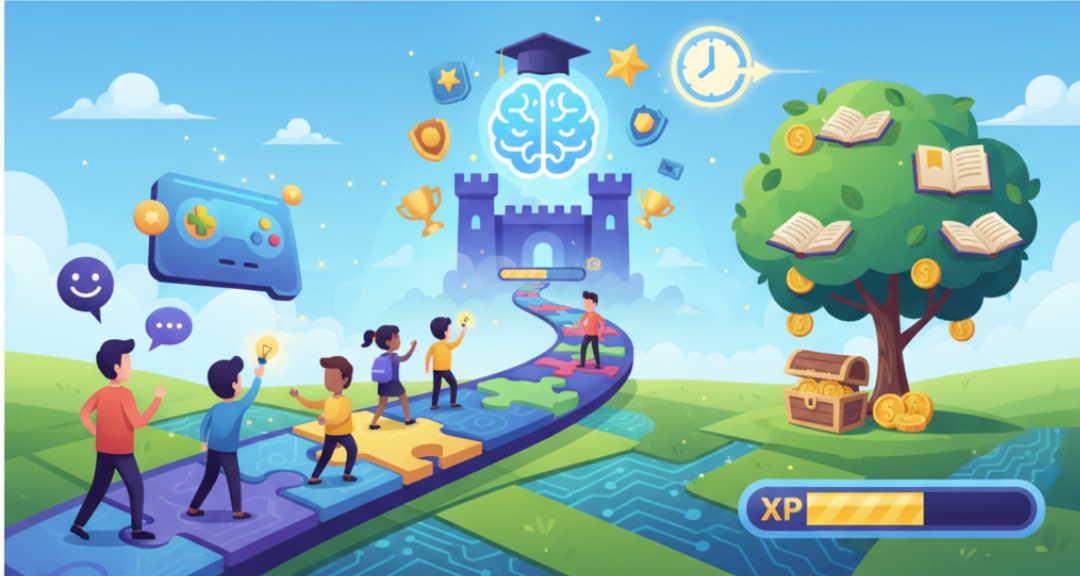
Learning is most effective when it feels engaging and exciting—much like a game. By incorporating game elements into Learning Management Systems (LMS), educators can tap into learners’ natural instincts for competition and achievement.
Gamification turns mundane tasks into fun challenges, encouraging learners to stay motivated and focused. In this post, we’ll discuss the powerful role of gamification in enhancing motivation and retention, and why it’s rapidly becoming a must-have strategy for online learning platforms.
What is Gamification in LMS?
Gamification involves adding game elements like points, badges, leaderboards, and challenges to non-game contexts. In an LMS, gamification turns traditional learning into a more interactive and rewarding experience. It taps into learners’ natural desire for competition, achievement, and fun to keep them engaged. When used effectively, gamification can transform an otherwise standard course into an exciting and motivating journey.
Why Motivation Matters in LMS
Before diving into how gamification can improve motivation, it’s essential to understand why motivation plays a critical role in learning. Motivation is the driving force behind learners’ commitment to completing courses, participating in activities, and striving to reach educational goals.
Research from The National Center for Biotechnology Information (NCBI) reveals that motivated learners are more likely to retain information, complete tasks, and engage in active learning. In contrast, learners who lack motivation often struggle with course completion and can easily become disengaged. Gamification directly addresses this issue by infusing fun and competition into learning, providing learners with rewards, feedback, and challenges that keep them coming back for more.
1. Gamification Boosts Learner Engagement
Gamification makes learning more engaging by turning it into a fun and interactive experience. Instead of passively consuming content, learners actively participate through quizzes, challenges, and games.
- Points and Badges: These rewards recognize learners for completing tasks and reaching milestones, giving them a sense of accomplishment.
- Levels and Challenges: Similar to video games, learners can progress through levels or face challenges that motivate them to keep going.
This level of interaction makes learners more likely to stay engaged and motivated to continue learning.
2. Instant Feedback Keeps Learners Motivated
Gamification in LMS offers immediate feedback, which is crucial for maintaining motivation. Instead of waiting for days to receive feedback, learners get instant results after completing quizzes or tasks.
- Quizzes and Competitions: Instant feedback helps learners understand where they did well and where they need to improve.
- Progress Tracking: Features like progress bars and achievement trackers keep learners focused on their goals.
Instant feedback reinforces learning and motivates learners to improve continuously.
3. Gamification Enhances Retention
Active participation is key to knowledge retention. Gamification encourages learners to interact with the content through tasks that require critical thinking, problem-solving, and collaboration.
- Learning Challenges: These encourage learners to apply what they’ve learned in real-world scenarios.
- Simulations and Role-Playing: These help learners practice skills in a virtual setting, which reinforces their understanding.
Active learning through gamified content boosts retention, as learners are more likely to remember information when they apply it.
4. Healthy Competition Drives Motivation
Gamification leverages competition to drive motivation. Leaderboards show learners how their progress compares to others, which pushes them to do better.
- Leaderboards: Ranking learners based on performance encourages them to keep striving for improvement.
- Rewards for Ranking: Offering additional recognition or rewards for top performers motivates learners to excel.
A bit of friendly competition can inspire learners to engage more deeply with course material.
5. Personalized Learning Paths Keep Learners Engaged
Gamification allows for personalized learning experiences. LMS platforms can adjust the content based on a learner’s progress, ensuring they are always challenged but not overwhelmed.
- Adaptive Learning: Gamified LMS platforms adjust content difficulty based on a learner’s performance, keeping them engaged at their own pace.
- Unlocking New Content: Learners can unlock new lessons or levels as they progress, which adds excitement and motivation to keep learning.
Personalized learning paths make the process feel more relevant to the learner, which encourages continued engagement.
6. Gamification Builds a Sense of Community
Gamification encourages collaboration and social interaction. Learners can work together on challenges, share achievements, and even compete in teams.
- Team-Based Competitions: Group challenges promote teamwork and create a sense of camaraderie.
- Peer Recognition: Publicly recognizing achievements via badges or leaderboards boosts morale and keeps learners motivated.
Feeling part of a community motivates learners to continue their education and stay engaged with the content.
7. Gamification Helps Prevent Burnout
Long, monotonous lessons can lead to burnout, but gamification introduces variety and rewards to keep learners interested.
- Microlearning: Breaking lessons into smaller, manageable chunks makes learning feel less overwhelming.
- Fun Elements: Games and challenges provide breaks from traditional lessons, making the learning experience feel more like play than work.
Gamification adds excitement and variety, helping learners stay motivated and avoid burnout.
Conclusion
Gamification in LMS platforms is an effective strategy to enhance both retention and motivation. By incorporating game elements like rewards, challenges, and leaderboards, gamification transforms traditional learning into an engaging, interactive experience. It encourages active participation, provides instant feedback, and fosters a sense of competition and community. As eLearning continues to grow, gamification will play a key role in ensuring that learners remain motivated and retain what they learn.